 Join The Club





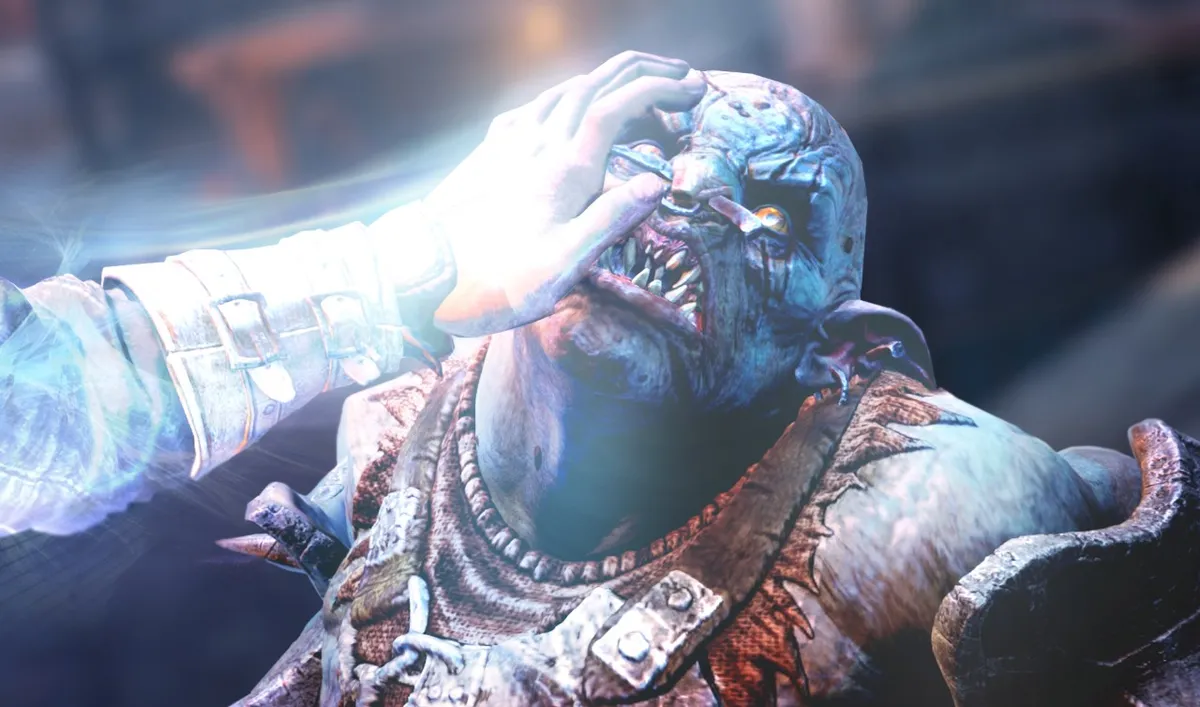
Middle Earth: Shadow of Mordor was a surprising sandbox action game from Monolith, who arguably hadn't delivered a hit since F.E.A.R. way back in 2005. Shadow of Mordor's acrobatic combat and orcish investigations earned lots of praise in our review, but the thing we continue to celebrate most about it is the Nemesis system, Monolith's fresh and inventive take on procedurally generated enemies.
Rather than having the droves of nameless orcs you plow through led by predetermined enemies, the game's generals and warchiefs were procedurally generated as you play—primarily from orcs that best you in battle. In other words, if you were cut down in a fight, the orc that struck the killing blow was promoted, given a unique name, title, and voice lines, and set up to fight you again in the future.
The system was great. It breathed a sense of history and persistence into an open-world game that was mostly about running around comboing groups of enemies with Batman: Arkham Asylum's elegant combat system. And in late 2014, the big thing everyone was talking about was not just that Shadow of Mordor was a great game (it still is), but that the Nemesis system was the future of enemy design—and ripe for copying.
Article continues belowShortly after Shadow of Mordor launched, game designer Mike Bithell, creator of Thomas Was Alone and Volume, wrote a blog post breaking down how the Nemesis system is actually a relatively small number of overlapping systems that work together to make you believe some smelly Uruk is going out of his way to harass you.

As Bithell wrote, the Nemesis system isn't actually very complicated when you examine its individual parts, which can be distilled down into two things: continuity and personalization. When you lose a fight to an orc, then have him show up later as a more powerful Uruk warchief, that's continuity. And when that Uruk has been given a unique name and title that his armies chant as you enter his territory, that's personalization. Neither of those things are particularly difficult to develop. The unique names and titles are essentially just constructed from pieces in a database, and then continuity is simply re-using that information in the future.
"This is a great system," Bithell wrote. "Pretty damn repeatable too, no reason that an indie game couldn’t do this on a text level."
But now, two years later, Nemesis ripoffs are nowhere to be seen. The sequel to Shadow of Mordor exists in leaks and rumors, and no game that I can think of, triple-A or indie, has implemented a similar procedurally generated enemy system.
No clones to be seen
Considering how freely ideas, mechanics, and gimmicks get borrowed, cloned, or iterated on in the gaming industry, it's surprising we haven't seen Nemesis in another form since 2014. It's easy to envision the likes of Ubisoft or Rockstar embracing enemy personalization in their own open-world sandboxes, for instance. The foot soldier that takes you out in Assassin's Creed could be promoted to castle guard, maybe even rising in the ranks enough to one day become an assassination target himself. Imagine a dynamic turf war in Grand Theft Auto or Mafia, where gang shootouts result in shifting territory and growing beefs.
Nothing makes you believe in a game character as much as the implication that they do stuff when you’re not looking.
Mike Bithell
How much more interesting would No Man's Sky have been if you had rival space explorers you would encounter periodically. Or what about a bounty hunter-type game, either old west or outer space, where your targets grow more cunning after each encounter. The system shouldn't be limited to open-world games either. Imagine if your quarterback gets tackled and injured in a football game like Madden, and then the QB's nerves are shot the next time he lines up opposite that defender.
Whether we've seen them yet or not, Bithell thinks that a heap of games will clone the system as a way to breathe life into NPCs. Hopefully the main reason we haven't seen any Nemesis-like systems yet is simply the lengthy period of time games take to develop. Shadow of Mordor launched two years ago—that's not really enough time for a completely new game to be developed. (After all, Shadow of Mordor's sequel is still yet to be officially announced.)
I did come across an in-development indie title called Pine, which developer Matthijs van de Laar said in a Reddit post is about evolution. "Instead of focusing on one species (the Orcs in SoM's case), we have a dozen species that are constantly alive and interacting with you and with each other," he wrote. "As you play Pine, you might encounter two species fighting—you can interrupt, help either species, or leave them be. But one of those species will come out stronger, and that reflects in the overall hierarchy of the world: survival of the fittest, basically. Your influence can change this hierarchy and make shifts in the game world."
The game's still a long ways off, but it shows the potential for Nemesis-like systems in games to come. Here's hoping more developers follow it and Shadow of Mordor's lead and give us worlds filled with enemies and NPCs worth remembering.


