Join The Club





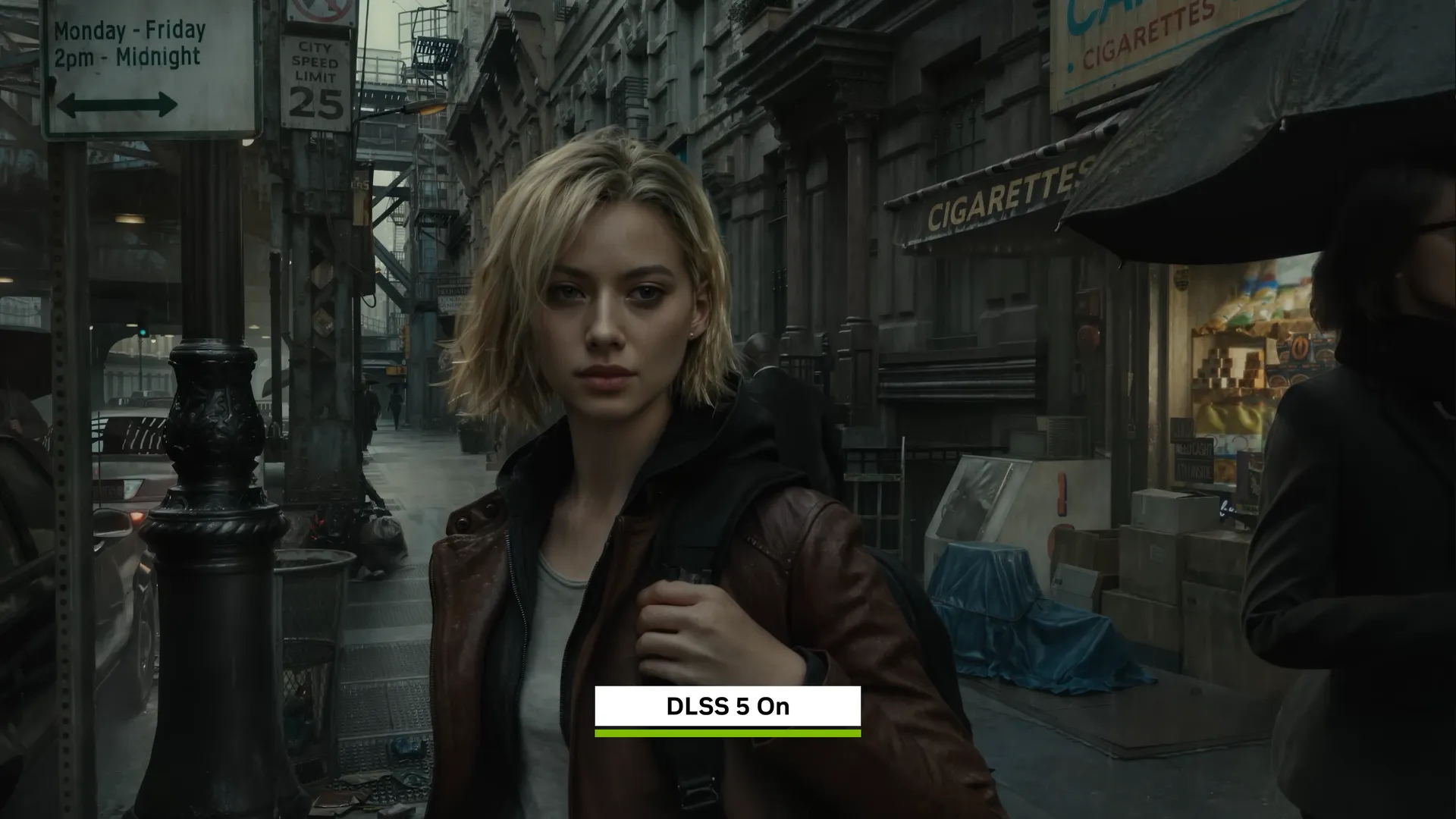
DLSS 5 is contentious, to put it lightly. Though execs from the likes of Capcom and Bethesda seem on board with the new generative AI rendering tool, some of its employees didn't even know it was going to be announced (admittedly, the logistics of informing all employees does make my head spin, not to mention a legal minefield of NDAs). Then, alongside this, the announcement drew ire from many developers, with some calling it "slop" or "disrespectful to the intentional art direction of devs". I recently had the chance to pick the brains of Dave Oshry, the co-founder of indie publisher New Blood Interactive, and David Szymanski, the developer behind Dusk, Iron Lung, and Gloomwood, to get their reactions to the tech.
Oshry tells me, "We as developers and players need to push back against this bullshit just like we did with NFTs and crypto games and try in vain to do with predatory micro transactions, loot boxes and battle passes."
Generative AI is already a hot topic among game developers. Some fear for the ethics of models that can technically scrape whatever work they like, and others fear that their output could contribute to the mass firing of many. A lot of game developers worry that executives making decisions might not favour the quality of handmade work over the benefits of getting artificial intelligence to create assets quickly and cheaply.


This is fundamentally changing the way video games look
Dave Oshry
DLSS 5 is not making assets and instead working with premade assets to make them more photorealistic, but that fear still exists. Oshry argues, "This is fundamentally changing the way video games look based on artificial intelligence that's been trained on Instagram models and Epstein memes."
"You used to have to spend hours poorly modding your games to make them look this 'cinematic', and now Nvidia is going to let you do it for free! Just kidding, it'll cost like $5,000."
What Oshry is referring to here is the two RTX 5090's required to render the DLSS 5 demo that Nvidia showed off last week. Nvidia has said it will be able to run off just one GPU, but one can assume that will be a high-end one, so a rather expensive setup will likely be needed for the launch of DLSS 5 later this year.
He goes on to argue, "At this rate, why make game art at all? Why not just draw some shapes and colours and let AI generate what it thinks it should look like?"
Last week, Oshry tweeted, alongside other critiques of DLSS 5, "We need to push back harder against it", so I asked what that looks like for developers and gamers.
"The only thing we can do besides calling them out on it and making them feel bad is voting with our wallets. Cripple their sales, tank their stock price. Stop collaborating with them as developers. Then maybe they'll think about going back to giving us what we want."
Oshry does clarify that he has "no dog in this fight other than being a PC gamer". He notes that New Blood makes retro indie games, and Amid Evil is the only game it has put DLSS and RTX in and "it was a huge pain in the ass, arguably made the game look worse, and didn't get us any extra sales. But it was a fun experiment and Nvidia sent us some free GPUs for our trouble. Yippie."
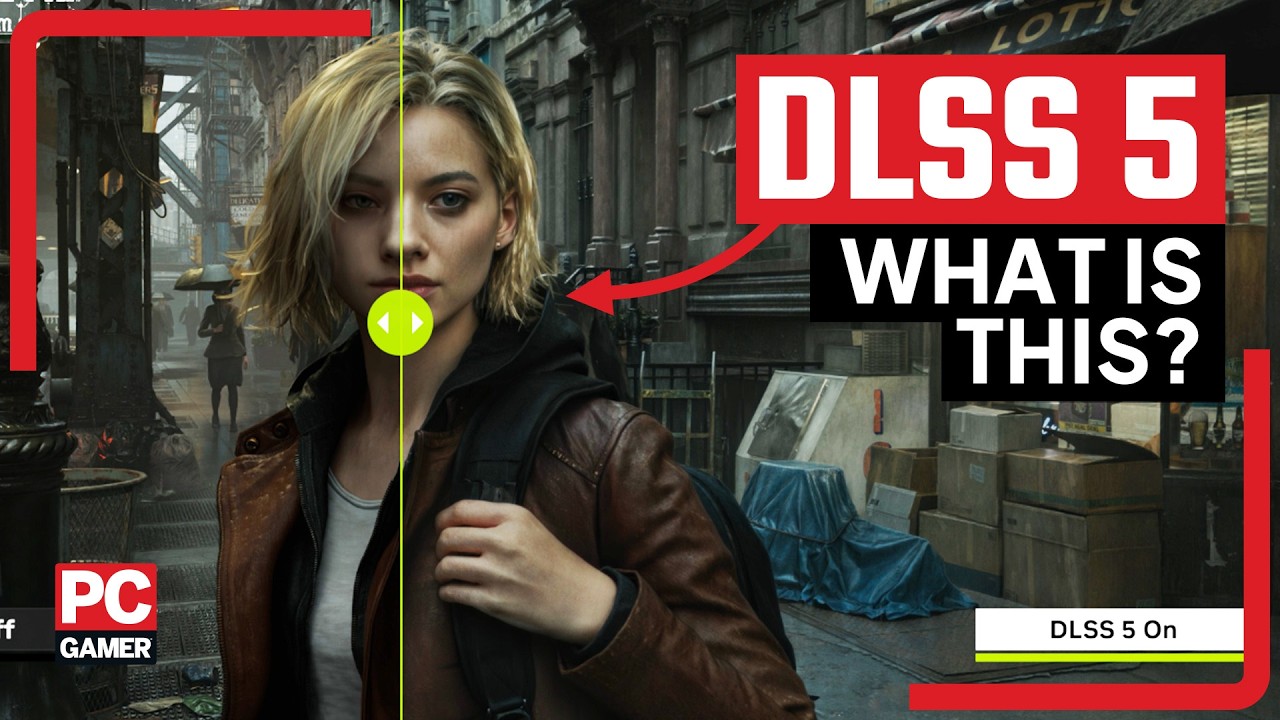
The lighting and contrast it adds (or removes, in some parts) makes scenes look less realistic and believable.
David Szymanski
Oshry notes Nvidia's constant role on the cutting edge and how products 3DVision and Nvidia Shield weren't massive hits in the industry. He calls PhysX (which is only sort of supported on RTX 50-series graphics) "costly but it sure was cool as hell watching concrete pillars dynamically explode into pieces during shootouts in Mafia 2."
As far as newer tech is concerned, he says RTX and Path Tracing are very costly bits of tech, though they make Cyberpunk 2077 look good. He does argue, though, that the jury's still out on frame generation.
Catching up with Szymanski, he tells me he agrees with everything said by Dave (including how cool PhysX was) but notes that, "even if we set aside all (relevant and valid) concerns about artistic intent and generative AI itself, the lighting and contrast it adds (or removes, in some parts) makes scenes look less realistic and believable."
"It especially sucks seeing it showcased in Resident Evil: Requiem," he notes, "a game that exemplifies quality and passion in AAA game design. Seeing Grace and Leon getting run through the slop filter as a 'victory lap' definitely feels like insult and injury combined into one."
A common refutation of criticism of DLSS 5 is that it's optional, but Szymanski argues it's not actually that optional. "You mean optional like upscaling? You mean optional like temporal AA? Optional like realtime GI? Optional like any number of 'optional' features that anyone who has played a AAA game in the past half decade can tell you aren't really optional, because games are now built to lean on those technologies."
Szymanski tells me that DLSS, TAA, and ray tracing are paying off, but at the cost of clarity, accessibility, and playability."While I'm not a graphics tech expert, I'm still not convinced that they've solved many problems that didn't already have solutions"
The debate around DLSS 5 is currently being had by game developers, with Jean Pierre Kellams, a lead producer over at Epic Games, saying, "If that was shown as a next-gen hardware reveal and not AI you guys would be going nuts."
All you guys roasting DLSS 5 like it doesn’t look better/is detracting from art direction are absolutely insane. The lighting and shading improvements are bonkers. If that was shown as a next-gen hardware reveal and not “AI” you guys would be going nuts like the Watch Dogs…March 17, 2026
Kellams argues that Grace Ashcroft from Resident Evil Requiem looks better with DLSS 5: "Her skin shader has much better subsurface scattering (she doesn't have the Japanese game character perfect skin). Her lips actually have creases now. Her ear stud is now catching light properly."
Even Kingdom Come: Deliverance 2's director has recently argued, "This is just a little uncanny beginning. No way haters will stop this. It's way more than a soap opera effect every TV has when you turn motion smoothing on."
DLSS 5 seems to be less smart than we initially thought, too. Jacob Freeman, GeForce Evangelist, describes it as taking a "2D frame plus motion vectors as input", which makes it pretty similar to applying an AI filter over the top of the game. It running in real-time is still impressive, but it brings into question the developer's ability to play with said tools.
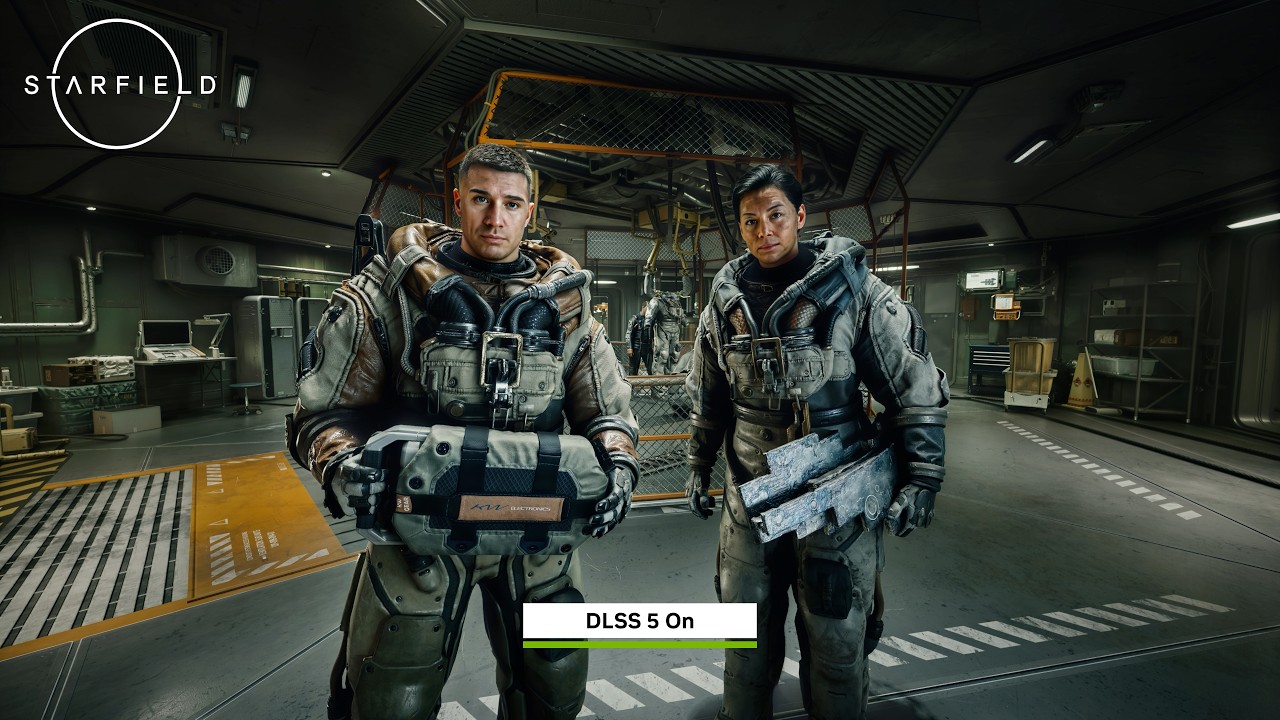
Szymanski feels gamers have been paying more and more for "lateral movements in rendering", and DLSS 5 represents a boiling point for it. "Nobody wants a fucking glorified autocorrect painting over the work of actual human beings making actual art."
He tells me that all he (and most gamers) want are games at a consistent frame rate with a good resolution, strong art design and consistent lighting "on hardware that doesn't require us to remortgage our house, using technology that doesn't necessitate turning the world into a Mad Max wasteland."
Nobody wants a fucking glorified autocorrect painting over the work of actual human beings making actual art.
David Szymanski
Importantly, both Oshry and Szymanski feel the public element of the criticism against Nvidia is important. Szymanski says, "I don't know if DLSS5 is going to be here to stay or not, but it's heartening to at least see so many of us in agreement"
"Hopefully if we're all loud and insistent enough, and we throw the weight of our wallets around, companies like Nvidia will eventually get the message."
"That or this will simply be the newest in a long line of features that indie developers don't have to use, and the indie and AA scenes will continue to provide a wild variety of visual styles that don't require thousands of dollars in hardware to render."

1. Best overall: AMD Radeon RX 9070
2. Best value: AMD Radeon RX 9060 XT 16 GB
3. Best budget: Intel Arc B570
4. Best mid-range: Nvidia GeForce RTX 5070 Ti
5. Best high-end: Nvidia GeForce RTX 5090