Join The Club





Google published a whitepaper yesterday that dramatically pulled in the horizon on bitcoin and other cryptocurrencies. Google Quantum AI researchers claim that cracking the cryptography protecting many major coins, including bitcoin and ether, could require a quantum computer with fewer than 500,000 physical qubits, something in the order of 20 times lower than previous estimates, Forbes reports.
Indeed, one of the paper's co-authors, Justin Drake, has concluded that the timeframe for "Q-Day", the hypothetical moment when a sufficiently powerful quantum computer becomes capable of breaking the public-key encryption algorithms that underpin much of modern digital security including cryptocurrencies, could arrive much sooner than previously thought.
Today is a monumentous day for quantum computing and cryptography. Two breakthrough papers just landed (links in next tweet). Both papers improve Shor's algorithm, infamous for cracking RSA and elliptic curve cryptography. The two results compound, optimising separate layers of…March 31, 2026
"My confidence in Q-Day by 2032 has shot up significantly. IMO there's at least a 10% chance that by 2032 a quantum computer recovers a secp256k1 ECDSA private key from an exposed public key," Drake said on X.
To put all this into at least some kind of context, Google's current most powerful quantum device, the Willow chip, has 105 qubits, while IBM's Condor processor was the first superconducting qubit processor to surpass 1,000 qubits, notching up 1,121 qubits.
However, the simple qubit count can be a somewhat misleading metric. Google's 105-qubit Willow is in many ways more capable than systems with far more qubits, because it achieves fidelities of 99.97% for single-qubit gates, 99.88% for entangling gates, and 99.5% for readout across its entire 105-qubit array.
According to Google, a computer with 1,000 low-quality, error-prone qubits can easily be outperformed by one with 100 highly reliable ones. As a consequence, the quantum computing industry is shifting to measuring logical qubits or error-corrected groupings of physical qubits as a more meaningful measure.
It's also important to understand that Q-Day doesn't mean that all digital security is immediately toast. Broadly, there are two kinds of cryptography. Public-key cryptography relies on mathematical problems (factoring huge numbers, discrete logarithms and so on) that quantum computers can solve via Shor's algorithm. This is what Q-Day would actually represent.
Then there's symmetric encryption and hashing, including AES and SHA-2. Those are vulnerable to Grover's algorithm, which effectively halves the security strength rather than dismantling it entirely. In that scenario, for instance, AES-256 encryption would be degraded to AES-128 levels of security. What's more, using longer keys in the first place would restore protection.
All of which means that Q-day would be less an instant end to all encryption and more a case of game over for public-key cryptography while everything else gets a little weaker and faces a painful but plausible migration to longer keys.

As Forbes reports, "Google’s whitepaper points out that cryptocurrencies are uniquely exposed among systems that rely on this type of cryptography. Blockchains use elliptic curve keys that are almost an order of magnitude smaller than RSA keys at comparable security levels, meaning a smaller quantum computer can crack them.
"And unlike traditional finance, which layers multiple safeguards, blockchains offer no recourse against fraudulent transactions. One forged signature could mean irreversible theft."
Indeed, Google's new paper, which is titled "Securing Elliptic Curve Cryptocurrencies against Quantum Vulnerabilities," does rather put a different spin on the company's declaration, which we reported on recently, that it is effectively prepping for the "quantum apocalypse" and planning to move over to post-quantum security measures by 2029.
Of course, for now this is just a prediction. Nobody has yet built a quantum machine with anything close to even the substantially reduced qubit count mooted in the new Google paper. But Q-Day does seem to be the opposite of many future technologies like fusion energy and a cure for cancer.
Instead of remaining slightly out of reach, always roughly the same way off into the future, Q-Day and the presumed demise of bitcoin seems to accelerating towards us.
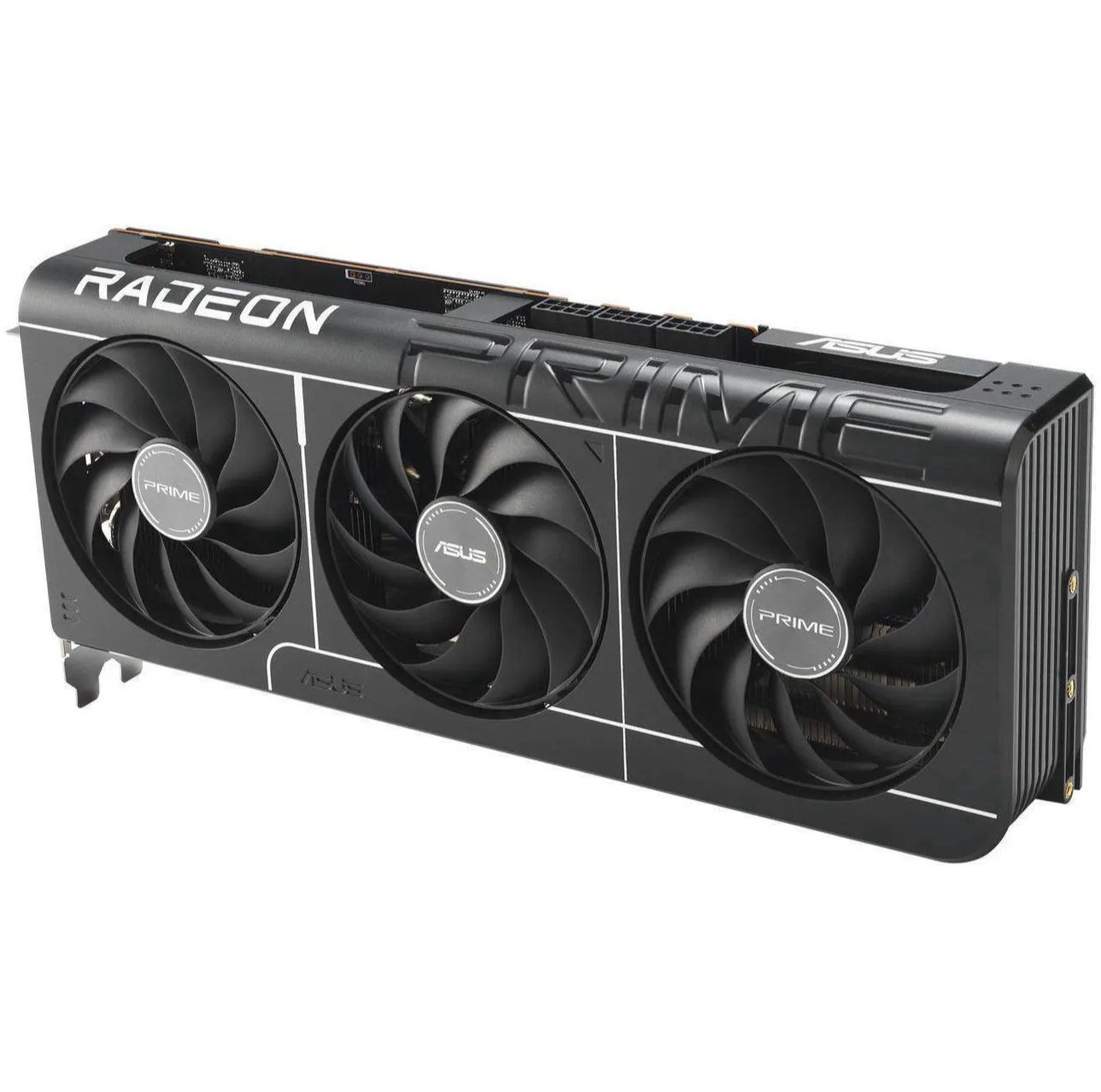
1. Best overall: AMD Radeon RX 9070
2. Best value: AMD Radeon RX 9060 XT 16 GB
3. Best budget: Intel Arc B570
4. Best mid-range: Nvidia GeForce RTX 5070 Ti
5. Best high-end: Nvidia GeForce RTX 5090

You must confirm your public display name before commenting
Please logout and then login again, you will then be prompted to enter your display name.