
Future Nvidia GPUs could be 20% better at Ray Tracing
But this baked in architectural improvement won't be seen until a while down the line.
Keep up to date with the most important stories and the best deals, as picked by the PC Gamer team.
You are now subscribed
Your newsletter sign-up was successful
Want to add more newsletters?
Every Friday
GamesRadar+
Your weekly update on everything you could ever want to know about the games you already love, games we know you're going to love in the near future, and tales from the communities that surround them.
Every Thursday
GTA 6 O'clock
Our special GTA 6 newsletter, with breaking news, insider info, and rumor analysis from the award-winning GTA 6 O'clock experts.
Every Friday
Knowledge
From the creators of Edge: A weekly videogame industry newsletter with analysis from expert writers, guidance from professionals, and insight into what's on the horizon.
Every Thursday
The Setup
Hardware nerds unite, sign up to our free tech newsletter for a weekly digest of the hottest new tech, the latest gadgets on the test bench, and much more.
Every Wednesday
Switch 2 Spotlight
Sign up to our new Switch 2 newsletter, where we bring you the latest talking points on Nintendo's new console each week, bring you up to date on the news, and recommend what games to play.
Every Saturday
The Watchlist
Subscribe for a weekly digest of the movie and TV news that matters, direct to your inbox. From first-look trailers, interviews, reviews and explainers, we've got you covered.
Once a month
SFX
Get sneak previews, exclusive competitions and details of special events each month!
Nvidia is working on a new technique to improve the ray tracing capabilities of future GPUs. Ray tracing is all about calculating lighting and reflections to create detailed light and shadows in videogames. It's quite demanding, but looks outsanding in games that were designed for it like Control, or can even bring new life to older titles like Half-Life. The new enhancement is called Subwarp Interleaving, and while it’s not currently ready to be implemented, it does sound like a promising potential step forward for GPUs.
Spotted by Ox22h on Twitter (via Tom’s Hardware), Nvidia recently posted a research paper which explains this new development. Subwarp Interleaving works by being better optimised to deal with ray tracing’s tendency to have high thread divergence and low warp occupancy in applications. It’s already showing gains that are on average 6.3% above usual, and can get up to 20% in best-case scenarios.
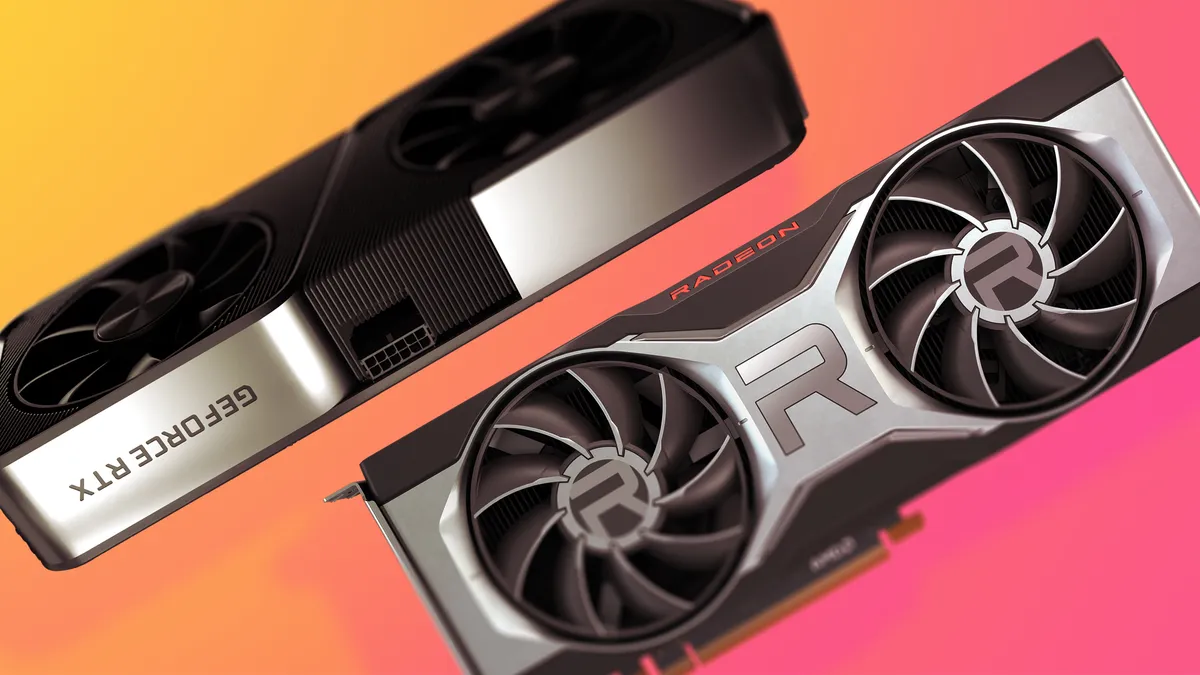
How to buy a graphics card: tips on buying a graphics card in the barren silicon landscape that is 2021
The researchers explained the way current GPUs work as a part of the problem. "First, GPUs group threads into units, which we call warps, that fetch from a single program counter (PC) and execute in SIMT (single instruction, multiple thread) fashion. Second, GPUs hide stalls by concurrently scheduling among many active warps."
This design gets in the way of ray tracing, leading to warp-starved scenarios. Subwarp Interleaving is said to make better use of these characteristics, such as increasing hardware utilisation using the divergent paths, as well as reducing any warp latency.
"When a long latency operation stalls a warp and the GPU's warp scheduler cannot find an active warp to switch to, a subwarp scheduler can instead switch execute to another divergent subwarp of the current warp." explain the researchers.
To be implemented, Subwarp Interleaving requires architectural changes to current GPUs, so we won't be seeing it in something like Nvidia's new RTX 3090 Ti monster GPU. Still, it’s always good to see advancements in technology, and a 20% efficiency boost to ray tracing, is nothing to sneeze at. No doubt by the time this tech is ready to be implemented into graphics cards we’ll be seeing a bunch of other neat advancements to go with it.
Keep up to date with the most important stories and the best deals, as picked by the PC Gamer team.

Hope’s been writing about games for about a decade, starting out way back when on the Australian Nintendo fan site Vooks.net. Since then, she’s talked far too much about games and tech for publications such as Techlife, Byteside, IGN, and GameSpot. Of course there’s also here at PC Gamer, where she gets to indulge her inner hardware nerd with news and reviews. You can usually find Hope fawning over some art, tech, or likely a wonderful combination of them both and where relevant she’ll share them with you here. When she’s not writing about the amazing creations of others, she’s working on what she hopes will one day be her own. You can find her fictional chill out ambient far future sci-fi radio show/album/listening experience podcast right here.
No, she’s not kidding.

