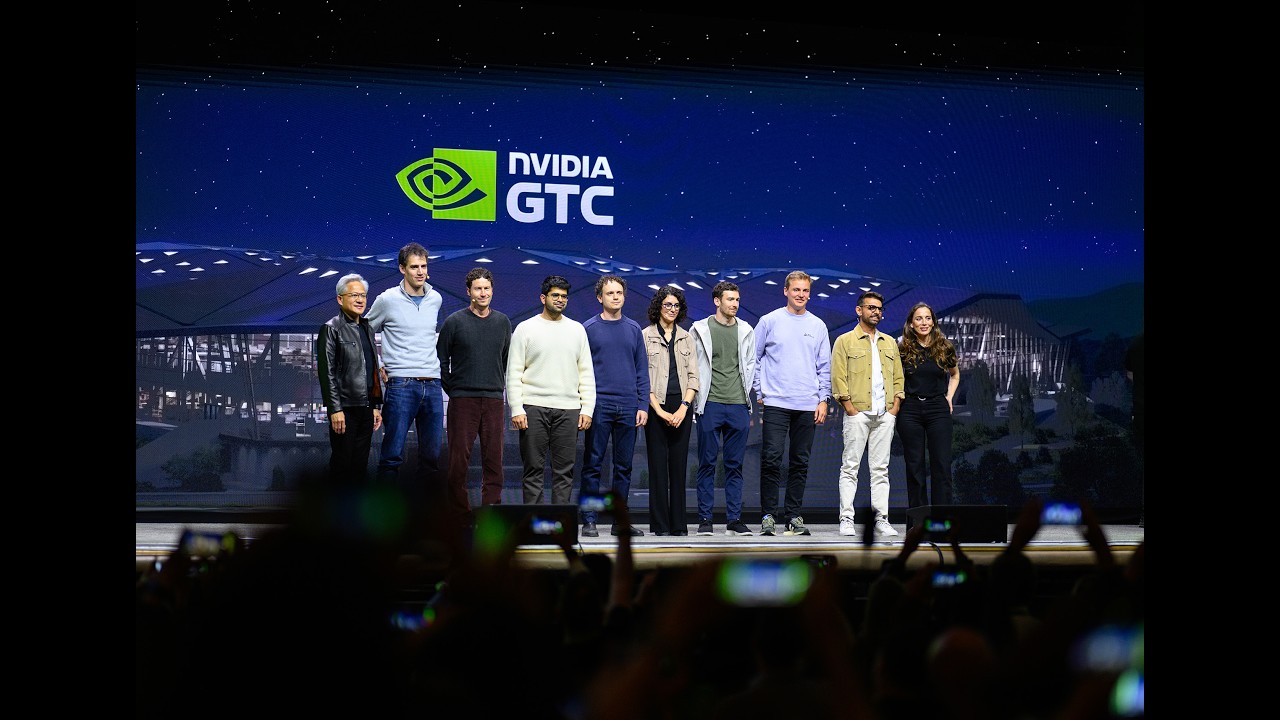
The world of AI boffins really is baffling, sometimes. I'm finally used to the idea that I can chat to a non-sentient, very knowledgeable and occasionally hallucinatory machine, and already we're talking about AI models interacting with AI models. It's only in such a world that Nvidia CEO Jensen Huang could think to utter the seemingly contradictory statement: "Proprietary versus open is not a thing. It’s proprietary and open.”
It's important to note that they aren't saying that you can have proprietary open-source code, as that would indeed be a contradiction. You can have a company make its code open to public viewing but requiring permission to actually use, but this wouldn't make it open-source, as open-source code must have a license from the Open Source Initiative (OSI), which requires the code to be allowed to be "freely used, modified, and shared."
Instead, they mean that there exist broader open foundation models alongside more specialised proprietary ones, and this is becoming increasingly relevant as AI "orchestration systems" are starting to crop up, which interact with other tools. These tools can and presumably will—assuming the AI industry continues on an upward trajectory—use AI themselves. So, we're essentially talking about AI interacting with AI, orchestrated by AI.
Cursor CEO Michael Truell explains this system:
"I think we're going to see the rise of these compound agents that can be smarter than any one model on their own and mix them all together... All you have to do is delegate your task. You don't have to worry about which model is good at what; it's for the orchestration system to figure it out. These sub-agents are like musicians, and the models are just instruments, and the work that AI gets done for you is the symphony or the music that they play."
Jensen agrees:
"Even in a closed-model company, I really believe that open models will be used as part of the agentic system, where the closed model is your crown jewels."
So, if you've only just started getting used to chatting to a single AI model, the bad news is the AI industry has already ploughed ahead into more complicated pastures.
Anyone who's been paying attention to the hype surrounding OpenClaw will probably already know this, though. This is an open-source AI that essentially acts as a middleman between your various accounts, applications, and, importantly for this discussion, your other AI subscriptions.

I suppose it is a little like a conductor of an orchestra. A very mechanical, lifeless, orchestra. And when our software and even our operating systems are becoming more *gulp* agential, it's not difficult to envision a world where open-source AI models interact with proprietary agential ones, and we oversee the former.
But just to fan the flames against techno-determinism for a moment, why couldn't all these models be open-source?
Reflection AI CEO Misha Laskin seems to agree:
"I think the other big misconception is on open models, that somehow open models are fundamentally going to be behind the frontier... I think that's just an artifact of the time where we are today. There's nothing fundamentally different between an open and a closed model."
In which case, why not have it all open?

I suppose the argument would be that there will always be a need for proprietary models for different use cases. And there might always be room for specialism when it comes to data sets, training, and implementation.
On that note, I'll let Huang take us over the finish line with a similar sentiment:
"We love a world where there's proprietary products, but we also need a world where a whole bunch of companies and different industries in different domains need models as a technology that we could then transform into products."
At least, I think that's a similar sentiment. I can't quite tell.
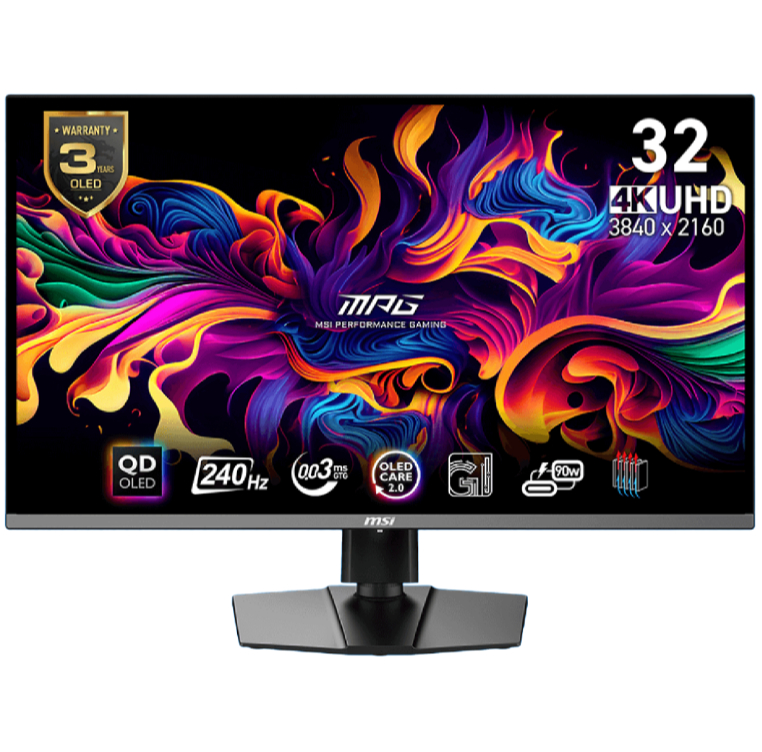
1. Best overall / 4K:
MSI MPG 321URX
2. Best budget 4K:
Asus ROG Strix XG27UCG
3. Best 1440p:
MSI MPG 271QRX
4. Best budget 1440p:
KTC H27T22C-3
5. Best 1080p:
AOC Gaming C27G4ZXE
6. Best Ultrawide:
Gigabyte MO34WQC2
7. Best budget ultrawide:
Xiaomi G34WQi
8. Best 32:9:
Samsung Odyssey OLED G9
9. Best dual-mode:
Alienware AW2725QF

You must confirm your public display name before commenting
Please logout and then login again, you will then be prompted to enter your display name.