Join The Club





Today is a Wednesday. I mention that because when it comes to news about the global memory market, you might just think that every day is now a Woesday instead. Enter Dell's CEO into the fray with an insight as to how things are going to fare over the next few years, and it's going to be worse: 625 times worse.
That's according to IT Home and Jukan on X, which claims that at a Bank of America event, Michael Dell said that "As memory per accelerator and system scale expand simultaneously in AI infrastructure, a structure is forming where total memory demand increases by approximately 625 times" (machine translation).
Is that good news? Hardly. There are only three companies in the whole world that manufacture HBM4—SK hynix, Samsung, and Micron—and while other companies are trying to catch up with HBM3 offerings, none of them can keep up with current memory demands, let alone how things are going to be in a couple of years.
By 2028, the big three memory makers are expected to have more production facilities in operation, but whatever they're able to get up and running, it surely won't be enough to cope with a DRAM demand that's going to be many times larger than it already is. And it's not just HBM that's going to be in crushingly short supply; LPDDR5x (memory used in laptops and handhelds) and NAND flash storage will too.
A single rack/compute tray in an Nvidia GB200 NVL72 AI server, for example, requires 480 GB of LDDR5X, and a full rack tower has up to 144 E1.S slots (server equivalent of M.2), each home to multiple terabytes of fast SSDs.
A fully kitted-out NVL72 tower could have as much as 17 TB of DRAM and 547 TB of flash storage. That's just one tower, and big AI data centers use hundreds, if not thousands, of them.
If we're lucky, the growth in DRAM and flash manufacturing will be able to maintain the memory status quo (i.e. it's all outrageously expensive but still 'affordable' compared to how much a top-end graphics card costs), and should Dell's prediction comes to pass, we'll still be in with a chance of enjoying one of the best hobbies around.
Perhaps it's best not to consider what will happen if the demand-supply ratio for memory gets considerably worse.
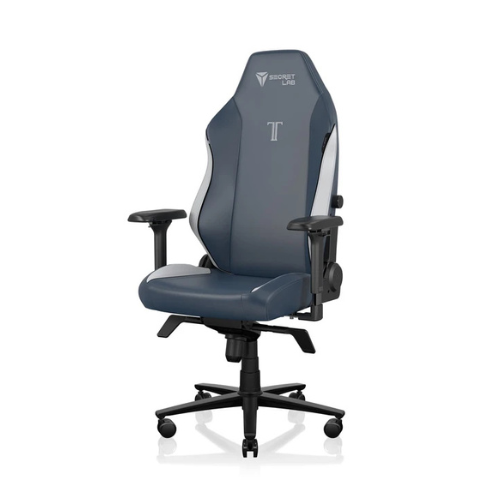
1. Best gaming chair: Secretlab Titan Evo
2. Best gaming desk: Secretlab Magnus Pro XL
3. Best gaming headset: Razer BlackShark V3
4. Best gaming keyboard: Asus ROG Strix Scope II 96 Wireless
5. Best gaming mouse: Razer DeathAdder V4 Pro
6. Best PC controller: GameSir G7 Pro
7. Best steering wheel: Logitech G Pro Racing Wheel
8. Best microphone: Shure MV6 USB Gaming Microphone
9. Best webcam: Elgato Facecam MK.2

You must confirm your public display name before commenting
Please logout and then login again, you will then be prompted to enter your display name.