Keep up to date with the most important stories and the best deals, as picked by the PC Gamer team.
You are now subscribed
Your newsletter sign-up was successful
Want to add more newsletters?
Every Friday
GamesRadar+
Your weekly update on everything you could ever want to know about the games you already love, games we know you're going to love in the near future, and tales from the communities that surround them.
Every Thursday
GTA 6 O'clock
Our special GTA 6 newsletter, with breaking news, insider info, and rumor analysis from the award-winning GTA 6 O'clock experts.
Every Friday
Knowledge
From the creators of Edge: A weekly videogame industry newsletter with analysis from expert writers, guidance from professionals, and insight into what's on the horizon.
Every Thursday
The Setup
Hardware nerds unite, sign up to our free tech newsletter for a weekly digest of the hottest new tech, the latest gadgets on the test bench, and much more.
Every Wednesday
Switch 2 Spotlight
Sign up to our new Switch 2 newsletter, where we bring you the latest talking points on Nintendo's new console each week, bring you up to date on the news, and recommend what games to play.
Every Saturday
The Watchlist
Subscribe for a weekly digest of the movie and TV news that matters, direct to your inbox. From first-look trailers, interviews, reviews and explainers, we've got you covered.
Once a month
SFX
Get sneak previews, exclusive competitions and details of special events each month!
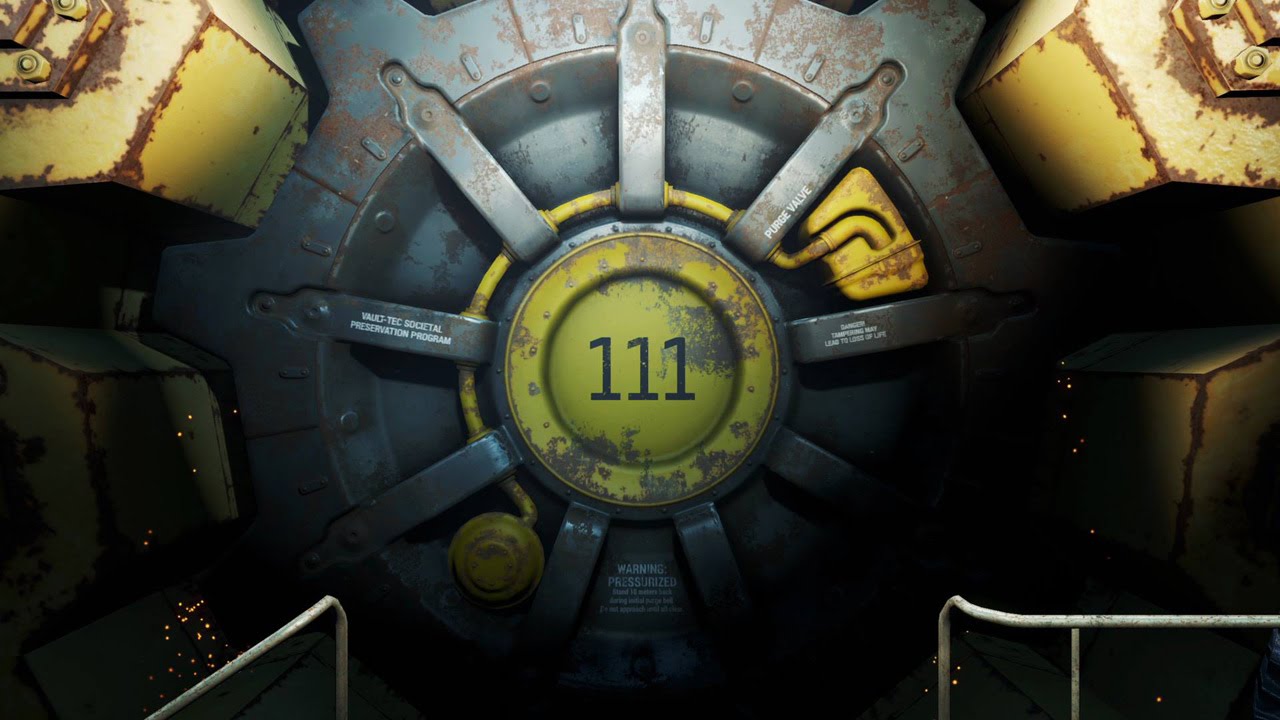
It's been a whole dang decade since Fallout 4 launched, so long that the world has slipped significantly closer to nuclear Armageddon than was the case when Bethesda's post-apocalyptic RPG stepped out from Vault 111. The anniversary has got Bethesda creative chief Todd Howard in a reflective mood, and he's revealed some interesting details about the creation of the game and what the RPG maestros learned from it.
One of the main things Bethesda learned is that cinematic, Mass Effect-style dialogue systems are a bad fit for Bethesda games. In an interview with GQ, Howard was asked what he thought the best game he'd worked on is. Responding diplomatically, Howard pointed to several features of multiple games, while also mentioning that some things "didn't resonate" with players. After a bit of coaxing, Howard revealed that Fallout 4's dialogue system was one of them.
"We spent forever on the dialogue system in Fallout 4," Howard said. "'How do we do an interactive conversation in an interesting way? How do we make that gamey? But it really did not resonate. It was also hard on our designers to write that way."
Elaborating on why the dialogue system didn't resonate, Howard explained that it conflicted with players' imaginations. "Players want to role-play more and we had a voiced protagonist. The actors were phenomenal, but a lot of players were like: 'That's not the voice I hear in my head'".
This was something PCG alumnus Andy Kelly noticed at the time. Shortly after Fallout 4 launched, Kelly noted that Fallout 4 was a good game but a bad RPG, highlighting the limitations of the dialogue system in particular. "The restrictions of the new dialogue wheel and the addition of a voiced protagonist have stripped away any chance to give your character a distinct personality," he wrote back in 2015. "The single voice on offer is so obviously tailored to fit a generic-looking white guy—like the one they used in the E3 demo—that it sounds weird coming out of anyone else."
This is likely why Bethesda swapped back to a more traditional dialogue system for Starfield, though as has been discussed frequently, Bethesda's latest RPG has its own array of issues. Hopefully Bethesda has learned as many lessons from that development as it works on its next game—The Elder Scrolls 6—which Howard mentioned that Bethesda "did a big play test" for only yesterday in the same interview.
Oblivion console commands: Cheats new and old
Oblivion lockpicks: Where and how to use them
Oblivion vampirism cure: Rid yourself of the affliction
Oblivion thieves guild: How to join the crew
Oblivion persuasion: Master the minigame
Keep up to date with the most important stories and the best deals, as picked by the PC Gamer team.
Rick has been fascinated by PC gaming since he was seven years old, when he used to sneak into his dad's home office for covert sessions of Doom. He grew up on a diet of similarly unsuitable games, with favourites including Quake, Thief, Half-Life and Deus Ex. Between 2013 and 2022, Rick was games editor of Custom PC magazine and associated website bit-tech.net. But he's always kept one foot in freelance games journalism, writing for publications like Edge, Eurogamer, the Guardian and, naturally, PC Gamer. While he'll play anything that can be controlled with a keyboard and mouse, he has a particular passion for first-person shooters and immersive sims.
You must confirm your public display name before commenting
Please logout and then login again, you will then be prompted to enter your display name.