Join The Club





Rumours around Intel's next-gen Nova Lake CPUs have multiplied rapidly in recent days. Highlights include an IPC performance advantage over AMD's upcoming Zen 6 chips, a core count upgrade for some models, and a massive APU variant to take on AMD's Strix Halo or its successor.
First up, those IPC claims. IPC refers to instructions per clock, and it's essentially a measure of how much work a CPU core does in each clock cycle. It's not a measure of overall performance, because IPC combines with clock speed to determine actual performance.
To be frank, with just those two data points, anything is possible. For instance, should AMD's clockspeed advantage be sufficient, it could still beat Intel regarding single-core performance. Exactly how high AMD will clock its next-gen Zen 6 cores isn't known, but some rumours point to figures in excess of 6 GHz thanks to the use of TSMC's most advanced N2P silicon.
Next up, Intel has apparently upgraded its mid-range Nova-Lake model from 42 cores to 44 cores. These variants have previously been said to be based on two Nova Lake compute tiles, each with 7 Performance, 12 Efficient and 4 Low Power Efficient cores. But the full-sized Nova Lake compute tile contains eight P cores. And now all eight are said to be enabled for this SKU according to another established X leaker, @jaykihn0.
Of course, the top Nova Lake chips have long been said to get 16 P cores, 32 E cores and four LPE cores, making for a grand total of 52 cores and a right old monster of a CPU. This new rumour does nothing to change that. What it does do is imply that whatever process Intel is using for Nova Lake, yields are probably decent.
After all, presumably the reason why Intel had previously disabled a P core in each tile on the previous 42-core model was to enable some chips with a dead P core to be used. If Intel has decided it doesn't need to do that, maybe yields are particularly good.
Another rumour involves a chip that is variously referred to as either Nova Lake AX or Razer Lake AX. Either way, what we're dealing with here is a monster APU that's said to use an absolutely huge socket known as LGA4326.

Indications of just such a socket have been found in shipping manifests on NBD Data attached to the NVL-AX code, which seems to be a pretty clear reference to Nova Lake AX. Some sources now refer to this chip as Razer Lake AX, and the implication here is that an earlier Nova Lake-based APU has been cancelled in favour of another APU using the newer Razer Lake architecture.
The most important aspect is that an LGA4326 implies an absolutely massive CPU socket with 4,326 contacts. @jaykihn0 on X says it's actually a BGA rather than LGA socket, but the point is that 4,326 contacts or pin outs is a massive step up from the 1,851 in Intel's current LGA1851 socket for desktop Arrow Lake CPUs.
Previously, Nova Lake AX was rumoured to run 28 CPU cores and 48 GPU cores, the latter based on Intel's upcoming Xe3P architecture. It's not known if the shift from Nova Lake AX to Razer Lake AX changes that, but given that this big APU is expected to be a chiplet design, it's quite possible that Intel could switch out the CPU tile but stick with its plans for the GPU tile.
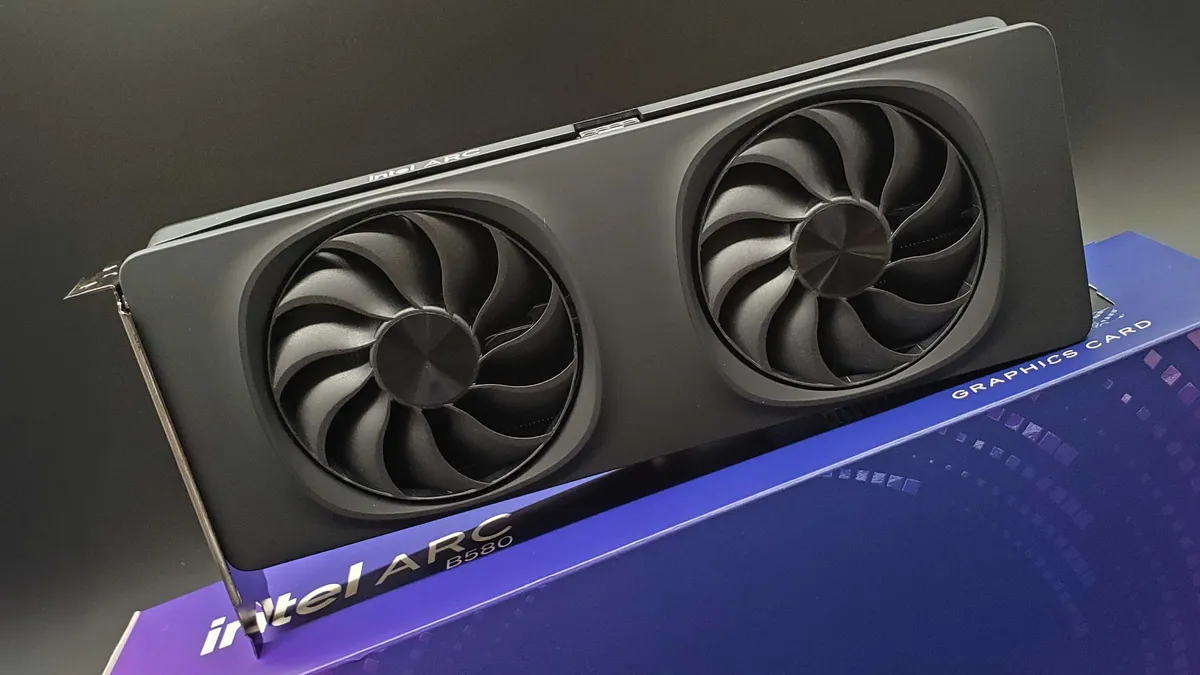
On paper, a GPU tile with 48 Xe3P cores would be hugely powerful. Intel's current Arc B580 GPU has just 20 Xe2 cores. So, this rumoured APU has well over double the cores, and presumably each Xe3P core is more powerful than an Xe2 core. That said, @jaykihn0 nevertheless claims that there will be a version for laptops, which is intriguing, even if most observers think Razer Lake AX will be targeted at running local AI workloads rather than gaming. We'll just have to wait and see.
Taken overall, what we probably can conclude is that Intel's next-gen CPUs look like a much more exciting family of chips than anything Intel has produced in recent years. We're talking very powerful individual CPU cores combined with high core counts and maybe even the option of an APU variant with a properly powerful GPU.
As ever, rumours are just rumours until products are launched. But we've haven't seen rumours this exciting about upcoming Intel chips for ages.
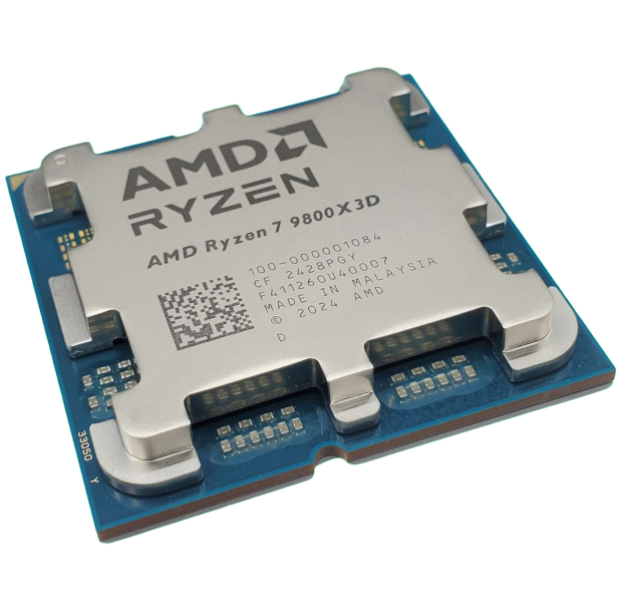
1. Best overall:
AMD Ryzen 7 9800X3D
2. Best budget:
AMD Ryzen 5 5500
3. Best mid-range:
Intel Core Ultra 5 250K Plus
4. Best high-end:
AMD Ryzen 9 9950X3D
5. Best AM4 upgrade:
AMD Ryzen 7 5700X3D
6. Best CPU graphics:
AMD Ryzen 7 8700G

You must confirm your public display name before commenting
Please logout and then login again, you will then be prompted to enter your display name.